
Listen Now: Insider Advice For Building Trust For School Leaders

It’s been a rough year, friends. Maybe the toughest I’ve experienced in my 17 years in education communications. Everyone was stressed, messaging was (understandably) inconsistent and we were constantly playing defense. No wonder building and maintaining trust was a challenge.
And yet, as we look to summer vacation and a fresh fall semester, I’m breathing a sigh of relief. I see so many opportunities in the second half of the year to (re)build relationships with our school communities.
Recently, my colleague Ashley and I joined Stacia Harris from the North Carolina School Public Relations Society to reflect on the pandemic and share ideas for how school leaders can cultivate trust with their stakeholders on this month’s School PR Drive Time podcast.
We share actionable tips and tricks for how to build trust with families and with school staff, talk about the long-term need for meaningful community engagement, and reflect on what the future holds.
Listen on SoundCloud, or on your preferred podcast app—and as always, let us know what you think!
PS - Get access to all the resources we discuss on the podcast, including our guide to Reaching Families Without Internet Access and Writing for Your Community, here on the podcast page.

POPULAR POSTS LIKE THIS
My first job after college was at a PR agency.
I was working with – and I’m not sure how else to phrase this – men’s men. Think: veterans starting their own government contracting businesses, construction CEOs, cybersecurity leaders and more. There was plenty of little lady-ing.
But there were also many, many lessons that I’m still using in my career today, 15 years later. I’m including one of my favorites, and some additional best practices, below.

You know those days where you just want someone to tell you where we're going to dinner?
Sometimes, I get really tired of making decisions – partly because as busy leaders, we make decisions at work all day, every day.
We ask questions such as:
Should we complete this grant application?
Which events should we go to?
Is that conference worth it?
And sometimes, your teammates don’t agree on the answer.
That’s why at Forthright, we use – you guessed it – a data-backed approach to make these decisions.
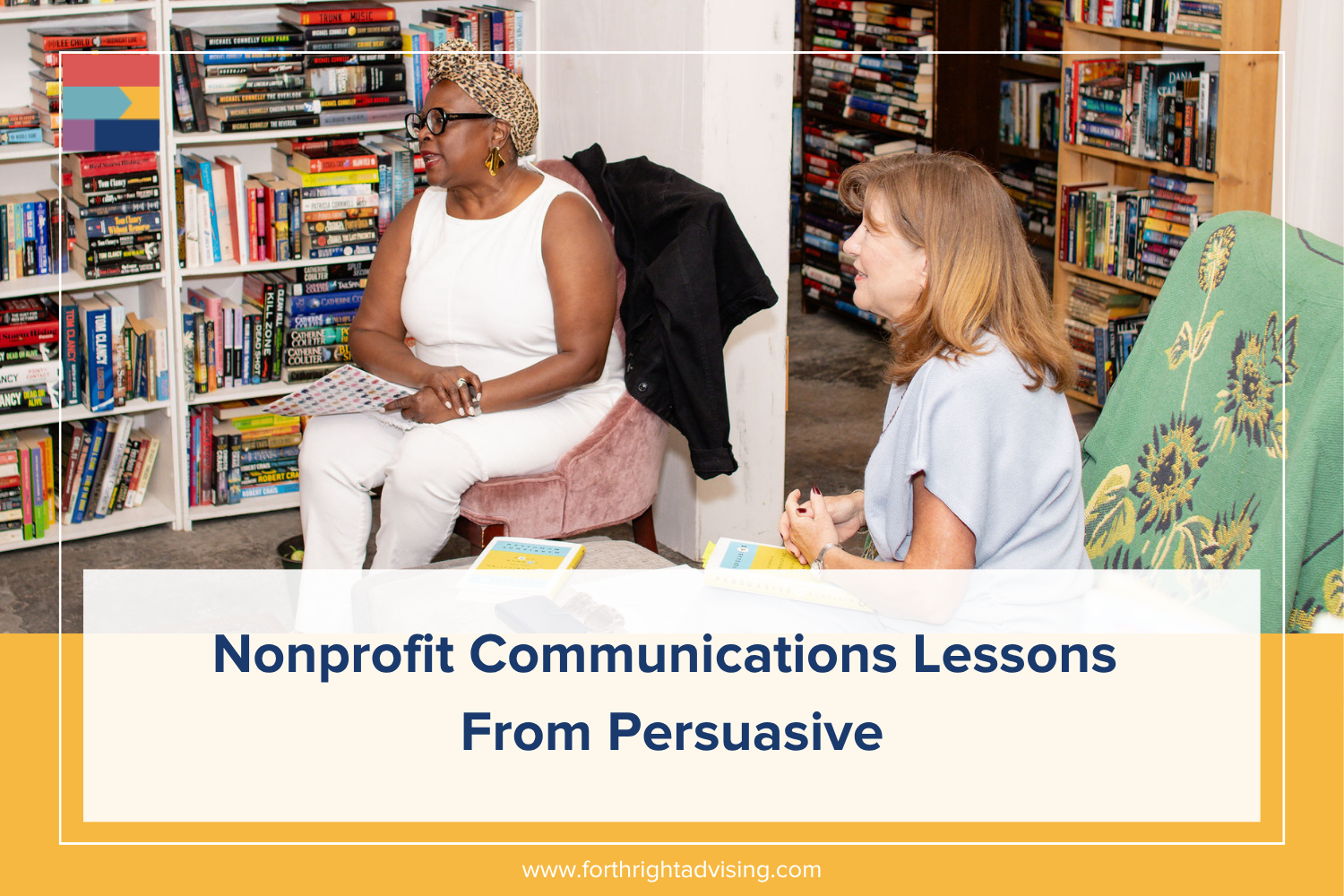
In our world of child and family advocacy, few communicators have navigated the trenches quite like Marrianne McMullen.
From managing high-stakes crises in the Obama administration to shaping narratives at DC Public Schools – where I had the immense privilege of working for her – Marrianne has spent her career masterfully championing policies that support children and families. Today, she serves as the Director of Communication & Dissemination at Chapin Hall, an independent research and policy center focused on child and family well-being.
To celebrate the two-year anniversary of her book, Persuasive, I sat down with my former boss and mentor to reflect on what it takes to effectively move the needle.
Age gaps exist all across the organization.
From your eager intern to your seasoned board members (and your program staff to your executive director), you're likely communicating across up to 40 years of generational differences.
Here are some tips and tricks to help you stay aligned.
When we launched our research process – the one that led to our new Frenemies + Jargon: Breaking the Habits That Stall Child and Family Advocacy report – I had suspicions about what we’d find.
We heard that as a field, we’re often fake friends.
Let’s break down what we heard and what we can do about it.
Our average coaching client is a communications director. For the sake of this blog, let’s call her Chloe.
Chloe typically works at a public school district, a foundation or a nonprofit.
She landed in her director role coming from the policy, program or development team. She may only have a few years of direct communications experience, but she’s a natural.
Most of the time, she’s a team of one, and she’s carrying everything communications for her organization.
That’s where we step in as a coach.
Here’s a behind-the-scenes peek at what we normally help out with.
So, you need to tell your board of directors or your school board some bad news.
First, blerg. Sorry about that!
Second, we’re here to help.
I've had the opportunity to be involved in some excellent examples of how to do this well – and, unfortunately, I’ve also had to help clean up a few, um… shall we say, less-than-stellar attempts.
Here is a key approach that I’ve seen work well over the years.
My cats have me trained.
Yeah, you read that right.
THEY trained ME.
Are we suckers? Oh, absolutely. No question.
Yet, there are some very solid communications lessons to be learned from being a human… trained by… a cat. Here’s what we can all learn.

We’re so used to chasing perfect. Perfection in our work, presenting the perfect image online.
But the thing is, people are tired of perfect. And that needs to impact the way we do our work and the way we advocate. Here’s what’s going on – and what to do about it.
I’m the first to admit it: I’m a nerd for data.
If something is going wrong – I want to know why, so I can fix it.
If something is going well – I want to know why, so I can keep doing it.
That’s why I love a good communications audit. Here’s why you should join me in my nerd-dom and hop on the communications audit train.
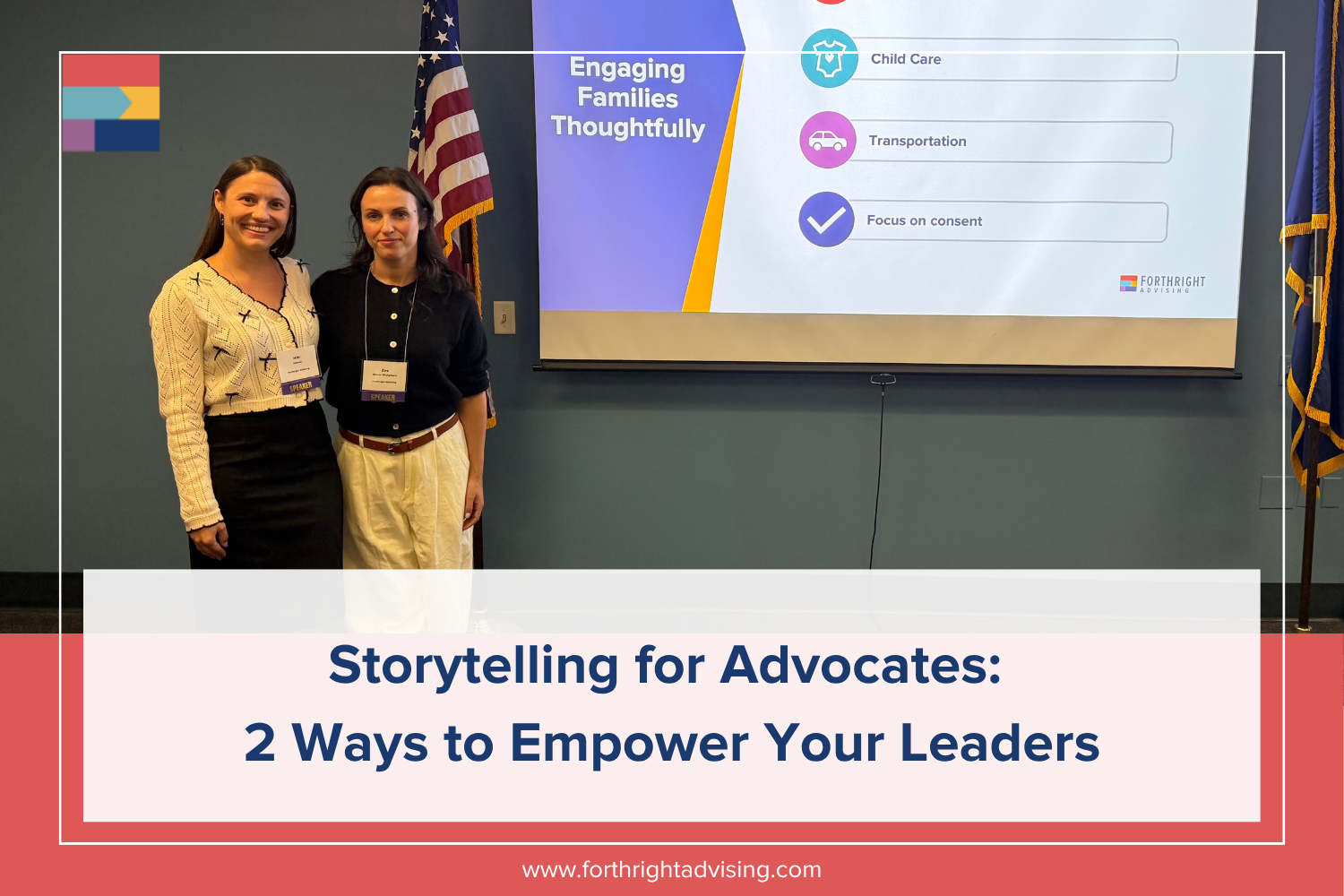
A couple of weeks ago, Zoe and I presented at the Pennsylvania Family Leadership conference. They invited us to speak about the power of storytelling. We walked through how storytelling can make a difference, best practices for setting up (or expanding!) a storytelling program and how to create smart storytelling practices.
We focused on how to ensure family leaders have what they need to succeed in storytelling. One family leader mentioned that while she has shared her story dozens of times, only one nonprofit ever truly prepared her.
That’s why I’m sharing some of our tips below!
Your team is working really hard. You know what? I’ll say it. Too hard. They’re surrounded by uncertainty, harm and crises. You’re facing staffing changes. (And we’re seeing an unprecedented spike in leadership turnover, too.) The landscape you’re working in is constantly evolving. It’s so easy for your team morale to take a hit when just one of these things occur.
But when all of them are happening all at once? It’s time to focus on improving your team morale.
You want your team to feel energized and hopeful, knowing their vital role contributes to the bigger picture.
How? Well, here are a few morale-boosters workshops we have hosted for various teams (including our own):
Today, it isn’t good enough to just throw your information up on the web and make sure it has the keywords you know your audience searches for.
Instead, you need to intentionally lay out information so that it appears in AI search summaries (like Google's AI overviews) and comes up in the right AI search answers. Recent research from UPCEA shows generative AI tools like ChatGPT, Gemini and Google's AI Overviews shape how people gather information, verify details and form opinions.
You pour massive energy into creating beautiful, data-rich resources for your campaigns. It’s heartbreaking when those tools do not reach the families and policymakers who need them most.
So… let’s fix that, shall we?

Too often, we overlook the people who already know us, love us, and can help us accomplish our goals.
It takes an intentional plan to mobilize these champions. As always, we’ve got you.
We’ve included your step-by-step guide for activating your champions at every phase of your campaign below!

Your team is (understandably) dragging.
You can feel them losing sight of your “why” amidst the chaos and changing priorities.
Team meetings are downbeat and everything feels… hard.
You’re not alone. We’re hearing it from organizations just like yours across the country.
That’s why we designed a special menu of 2026 trainings that naturally foster team connection and positivity.
The ultimate success metric is that your team walks away feeling energized, hopeful, and clear on their priorities and vital role in the organization’s future.
Here are a few options for a morale-boosting team training. (Psst – don’t worry, if these don’t feel quite right for your particular team, we can design a custom training just for you.)

You’ve heard me say it a million times: at Forthright, data is queen .
Now in an ideal world, you’d have thousands to invest in focus groups, interviews and robust surveys to help you answer our question. But for most child and family focused nonprofits, that’s simply not possible.
The good news? You don’t need a five-figure budget to get high-quality feedback. You can move away from guesswork by using the experts you already know: your community.
Here are three ideas that won’t break the bank!

In the same way you wouldn't wear pajamas to a keynote speech, an outdated brand can undermine your organization’s credibility. As we enter the new year, it’s time to ensure your visuals – from fonts and colors to photography – match the heart of your mission.
In this post, you’ll learn about:
The Trust Gap: Why outdated visuals make stakeholders wary of your message.
The Brand Audit: 7 critical questions to determine if you need a refresh.
Refresh vs. Rebrand: How to decide between a full visual overhaul (like our work with Positive Childhood Alliance NC) or high-impact small updates.
45-Minute Team Checklist: A step-by-step guide for your next communications meeting to audit your materials and prioritize updates for 2026.

I’ve heard it so often throughout my career: an organization that works with children and families is getting ready to launch a big initiative “just in time for Back to School!”
Eek.
Whenever we’re working on big announcement launches for clients — be it a new advocacy campaign, a report or fresh research — we specifically avoid launching during the last few weeks of August and early September.
Why?
Because the already-crowded media market gets so much worse for our clients during back-to-school season. Every organization and their brother, mother and sister is putting out news, striving to get that front-page placement or attention for their work.
We all have our favorite stats. (Okay, maybe not all of us. But at Forthright, we have our favorite stats. We’re nerds.) One of mine is about what it takes for people to REALLY remember your message. It’s called the Marketing Rule of Seven, and it’s pretty simple.
A person has to see or hear a message about seven times before it starts to resonate. Add to this number (say… 14 times) if your topic is particularly tricky, such as infant mental health or adolescent brain development.
Today, we’re including tips to make sharing that same, powerful message easy.

Press releases are still a fast and easy way to get your news out to lots of media outlets at once.
They're perfect for announcing simple, factual news, especially when you're short on time and can't send individual pitches.
Here are a few tips and tricks to create an effective press release in 2025 (no fax machine needed):

It’s a familiar feeling. You know the one…
“OOPS! We completely forgot. It’s time to do that project again.”
It sounds like…
“Oops – we totally forgot to start on the Annual Report and now we need to run a sprint to meet the big donor meeting deadline.”
“Oops – we forgot to do our yearly update of the website, and now an important policy partner is reviewing last year’s outdated information.”
It’s the WORST! I hate it when an annual project that you KNOW (gosh darn it!) happens every year sneaks up on you, and you’re left scrambling to get it done.
So let’s make a pact – eh? This year will be the last year that projects sneak up on you from behind and spook you into action. Here’s how to prevent the dreaded scramble.

So you’re going to host an event. And…you think it’d be great if local reporters were there.
Time for a media advisory!
Media advisories are essentially a heads-up to journalists about an upcoming event, such as a media briefing or a conference presentation. (Not to be confused with a press release – media alerts are much more basic.)
Today, we’ll break down when to use them, share some tips and even show you a (Harry Potter-themed) sample…

The average lifespan of a website is 2 years and 7 months, according to OrbitMedia.
Which probably makes you wonder…When was the last time you updated your organization’s website?
My guess is that it’s been longer than 2 years.
Is it time for a website update or redesign? Maybe.
Here’s how to tell.

It’s finally – FINALLY starting to warm up. (Your girl is not meant for the winter.) That means some days, I’ll take a lunch run to enjoy the sunshine.
I was on one of these runs last week, bored and thinking about needing to mix up my exercise routine. And then I passed a lawn sign. It simply said:
Free Outdoor Workout Classes
And then included a QR code.
While I’ve been a TAD dramatic saying it changed my life, this is brilliant marketing.
Here’s why:

Data shows that a little happy goes a long way, from building stronger teams to reducing negative feelings overall. Today, we’re sharing how we share the happy at Forthright, along with research-backed tips for how you can share the happy within your own organization!

You worked so hard on that campaign. It’s so, so close to finished…and then someone comes in and blows it all up. 💥
We’ve all been there. But it doesn’t have to be that way. You CAN have smooth processes and easy review rounds. We promise a brighter future exists.
Today, we’re sharing three tips – tactics we use with our own clients – to make sure your projects have a clear process and a clean launch.
How do we do it? Let’s dive into our special sauce.

Making your content accessible to people with hearing or visual impairments has never been easier, especially if you think about accessibility at the beginning of a project. Here are four things to start doing today! Bonus: they don’t cost you a penny.