How to Ghostwrite for Nonprofit Executives: A 5-Step Guide
-
Great executive ghostwriting captures a leader’s authentic voice, reduces revision cycles and aligns strategic goals.
Establish Tone Early: Use a quick tone survey to map a leader's preference on questions like formal vs. casual, or academic vs. conversational.
Align with Style Guides: Clarify brand norms and technical grammar rules early – from Oxford commas to AP style – to prevent stylistic misalignment.
Identify Pet Peeves: Uncover specific banned phrasing or stylistic pet peeves before writing the first draft.
Pinpoint the Key Takeaway: Identify the single most critical message the audience must retain to maintain clarity and focus.
Define a Feedback Loop: Make your process clear!
While ghostwriting is absolutely one of my favorite projects, it's taken me years to get it right. (Or should I say write?). Today, I'm sharing some of my favorite best practices.
What are the most important steps to ghostwriting?
I’ve ghostwritten for more superintendents, CEOs and leaders than I can count. Here are the steps I never skip.
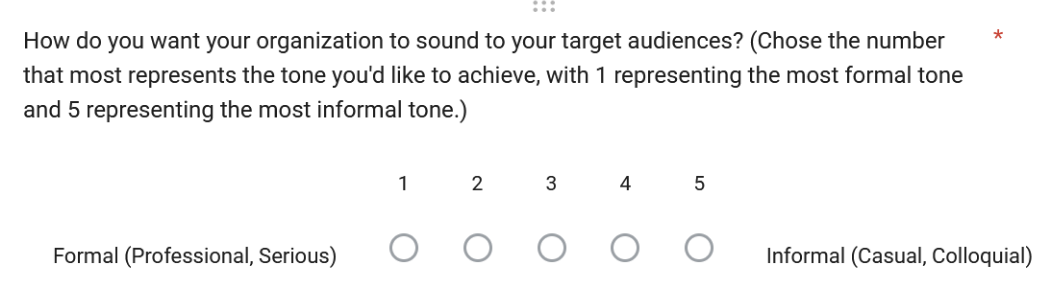
Start with tone. At Forthright, when we start writing for someone new, we always start with a (speedy!) tone survey. For example, among other questions, we ask how formal someone would like to sound:
Request the style guide. Ya’ll, grammar is divisive. Even our team here at Forthright can’t agree on the Oxford comma. (As the person who manages our style guide though, I get to win on that one.) Learn those norms early!
Ask about the ick. Most leaders have writing quirks that they hate. It could be ending a sentence with a prepositional phrase. Could be fragments. Figure it out early!
Ask for the key takeaway. I always like to ask “if your audience only walks away remembering one thing, what should it be?” That makes sure you never miss the most important point!
Psst: We’re including this step, assuming you already know the target audiences and specific goals. If you don’t, take a step back and start there!

Make it clear that feedback is welcome. Some people truly hate giving feedback – it makes them feel awkward or like they’ll hurt your feelings. To get around this:
First, share your specific feedback process.
For example, here at Forthright, we ask for allllll the big edits in the first round of feedback.
Then, after we make those edits, we ask for one more review to ensure it’s perfect. This is a small tweaks, polishing editing round.
Once you’ve explained the process, let them know you WANT their feedback to get it just right!
I’ve learned that ghostwriting is personal. It’s someone trusting you to get their voice right – to agree that they would write something like you’ve written, and that they’re proud to share it.
Using these quick steps, you’re one step closer to absolutely nailing that first draft.
P.S. And for you CEOs and leaders who are getting ghostwritten for – these same tips apply! Share your icks, your tone, your goals early. You’ll be happier for it.
-
Niki Juhasz
With 15 years of experience in strategic PR and high-stakes content creation, Niki specializes in executive ghostwriting, leadership messaging and impact-driven campaign strategy. Drawing on a background managing multi-million-dollar C-suite accounts and award-winning advocacy campaigns, she now partners with Forthright Advising clients to master their authentic brand voice.