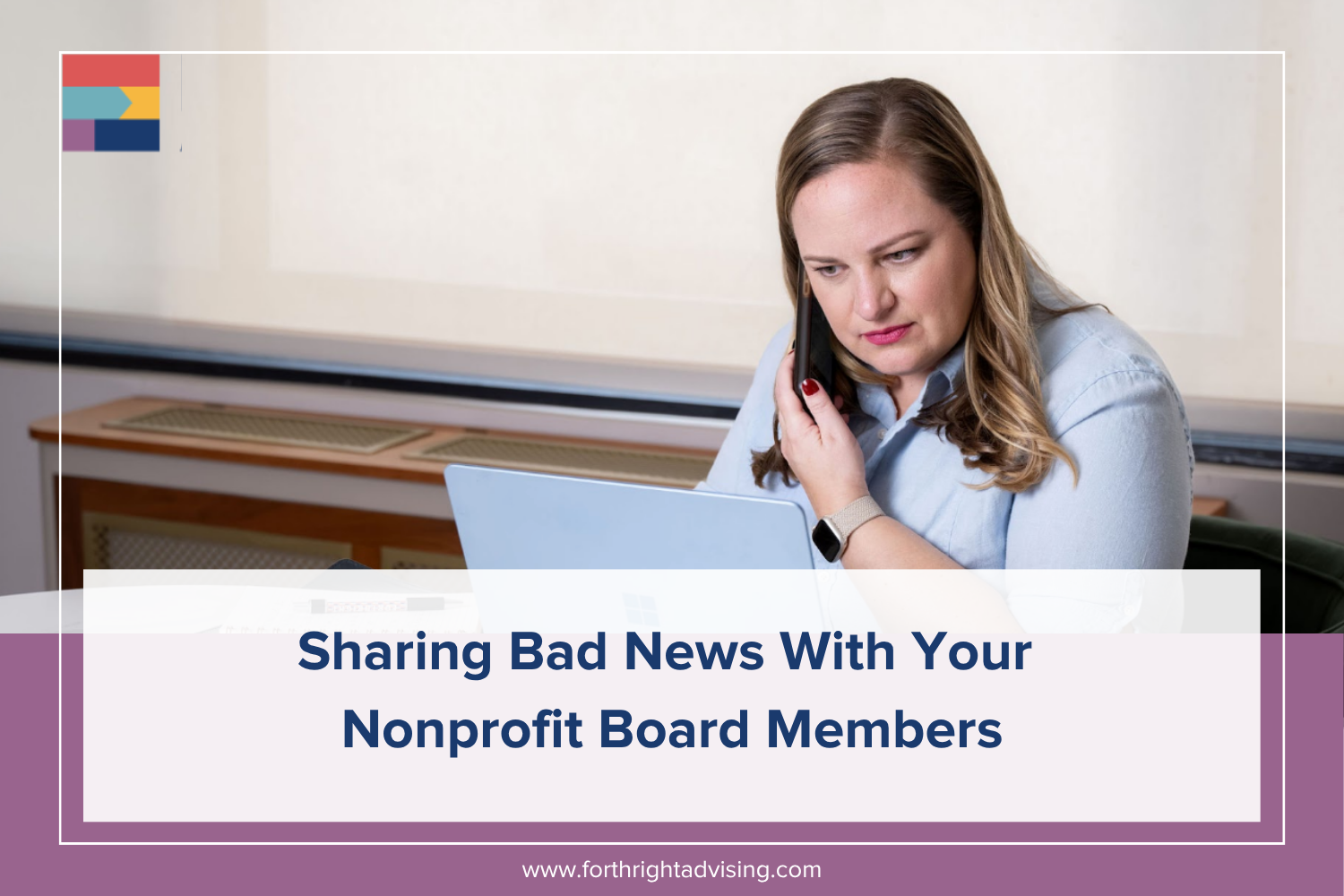
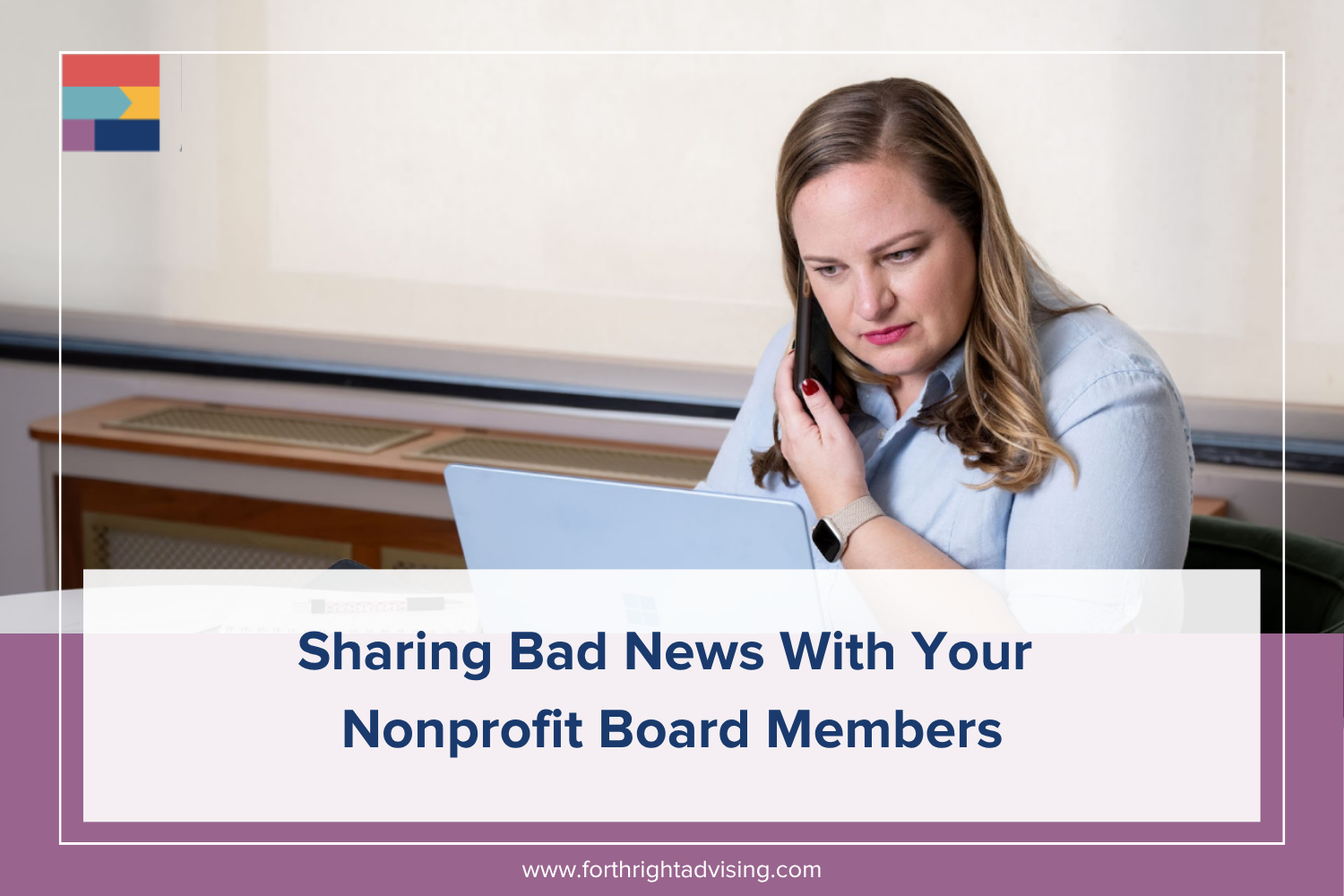
Sharing Bad News With Your Nonprofit Board Members
Written by Katie Test Davis
-
Provide clear context first: Ground your board in the history of the issue before sharing the bad news directly, quickly, and without drama.
Share a realistic action plan: Tell them exactly what happens next and what you are doing to prevent the issue from happening again so they know you have it handled.
Give them a specific way to help: Ask for their support with an action item, and follow up with 1:1 conversations to protect your long-term relationship.
So, you need to tell your board of directors or your school board some bad news.
First, blerg. Sorry about that!
Second, we’re here to help.
You’re not alone. A lot of our clients have to, occasionally, share bad or disappointing news with their board members.
I've had the opportunity to be involved in some excellent examples of how to do this well – and, unfortunately, I’ve also had to help clean up a few, um… shall we say, less-than-stellar attempts.
Here is a key approach that I’ve seen work well over the years.

how do you begin?
It’s in our name, and it’s part of our ethos. We don’t like to beat around the bush. And when you’re sharing bad news, you shouldn’t hide the ball.
It’s important to not overstate the bad news, and also to not under-state the bad news. Much like Goldilocks, you want to get it just right.
Here’s how:
1. Start with context. I call this the Zombie approach, first you need to get their brains – which means you need to do a little bit of grounding to start.
Share the history of how you got here and why you are where you are today. Oftentimes, people have a million things on their mind, and it’s your job to help them check in to the meeting and remember what came before.
This might sound like: “As you know, we’ve partnered with Family Philanthropy since 2022. Their $100,000 grant has been important to our housing program, because it funded the creation of our Vision Zero Campaign. We put in a new grant application for the next round of funding to continue our campaign at the end of last year.”
2. Let it rip. The second part of the zombie approach is to focus their brains. Don’t bury the lead. It’s time to reveal the problem. Do so quickly, clearly and without being dramatic.
This might sound like: “Last week, we learned that Family Philanthropy has shifted their funding focus, and we will not be getting the next round of funding we expected. That’s because they are no longer funding housing work.”
what do you share?
3. Name your next steps. Communicate what happens next so everyone is on the same page. Do this in a way that lets your Board members understand that you’ve thought this through and know what’s next.
This might sound like: “I’ve gone ahead and let Chantal (Director of Housing Programs) know that she won’t be receiving the next round of funding. She’s started to create an adjusted work plan for her team. Donna (Director of Development) is hard at work finding potential grants to apply to that may fill the gap.”

4. Optional step: spell out the prevention. Sometimes, you’ll need to make sure the board knows that your whoopsies or bad news won’t happen again. Here, you’ll need to clearly state what you’ve done to make sure this won’t happen again.
This might sound like: “I’ve met with Donna and Chantal. They are going to dedicate time for regular meetings with our funders. This ensures we stay current on evolving funder priorities and are aware of any upcoming changes to their strategies and plans that could affect our programs.”
How do you end?
5. Have a Call To Action/way to help. A board’s job is to create long-term stability for the organization and to support the Executive Director, so they’ll want to help. Even if you don’t… want… their help (which can sometimes be the case) give them harmless action items anyways. For example, maybe they could connect with Donna about any individuals in their network who may be good candidates for donor stewarding.
This might sound like: “While we’re obviously disappointed, we’re focused on what’s next for the housing program. I’d appreciate it if you could tap into your network and see if anyone you know may be funding housing campaigns. If so, we’d appreciate a warm handoff to your connection.”
What should you do after?
In the short term, you’ll want to follow up with this information in writing and include your call to action. In the long-term, you’ll want to make sure that board members know you’re on top of the issue.
Our team has conducted multiple projects (like audits) where we’ve worked to improve board communications.
One theme we always hear in these engagements is that board members appreciate one on one time with leadership.
This means, depending on the severity of the bad news, you may want to add 1:1 meetings with board members to your to-do list after you share the news. This can help you shore up the relationship, ensure they don’t have any further questions and avoids misunderstandings.
Great organization/board relationships start with intentional communication, even when times are tough. Your board members want to be on your side. But I know from doing some unpleasant cleanup, that without a realistic, clear communications plan, board members can be left feeling pushed aside, or worse, actively upset.
Take the time to share bad news intentionally, clearly and with solid next steps.
Your board will thank you!
Psst - Did any of this hit too close to home? We can help you improve your board communications by auditing how you currently communicate with your board members.
As a neutral third party, we’re perfectly positioned to get real results. We start by reviewing current practices, like how often you send emails, what meetings look like, and what your team’s workload is. We then talk with various board members about how they’d prefer to be communicated with, what’s going well and what’s not working (on all sides).
Finally, we come up with a recommendation and a go-forward plan. Our results show that after a board communications audit, board members show up to meetings better prepared and there’s less work on the staff side. Win/win.
About the Author
With nearly 20 years of public relations experience for nonprofits and school districts, Forthright Advising Founder Katie Test Davis knows how to handle hard conversations. Having worked in-house at three public school districts and four family-focused nonprofits, Katie has spent her career guiding executive leaders through difficult updates. Her superpower is communicating tough subjects with kindness, clarity and deep empathy, making her uniquely qualified to help you build trust with your board of directors — even when the news isn't what they want to hear.