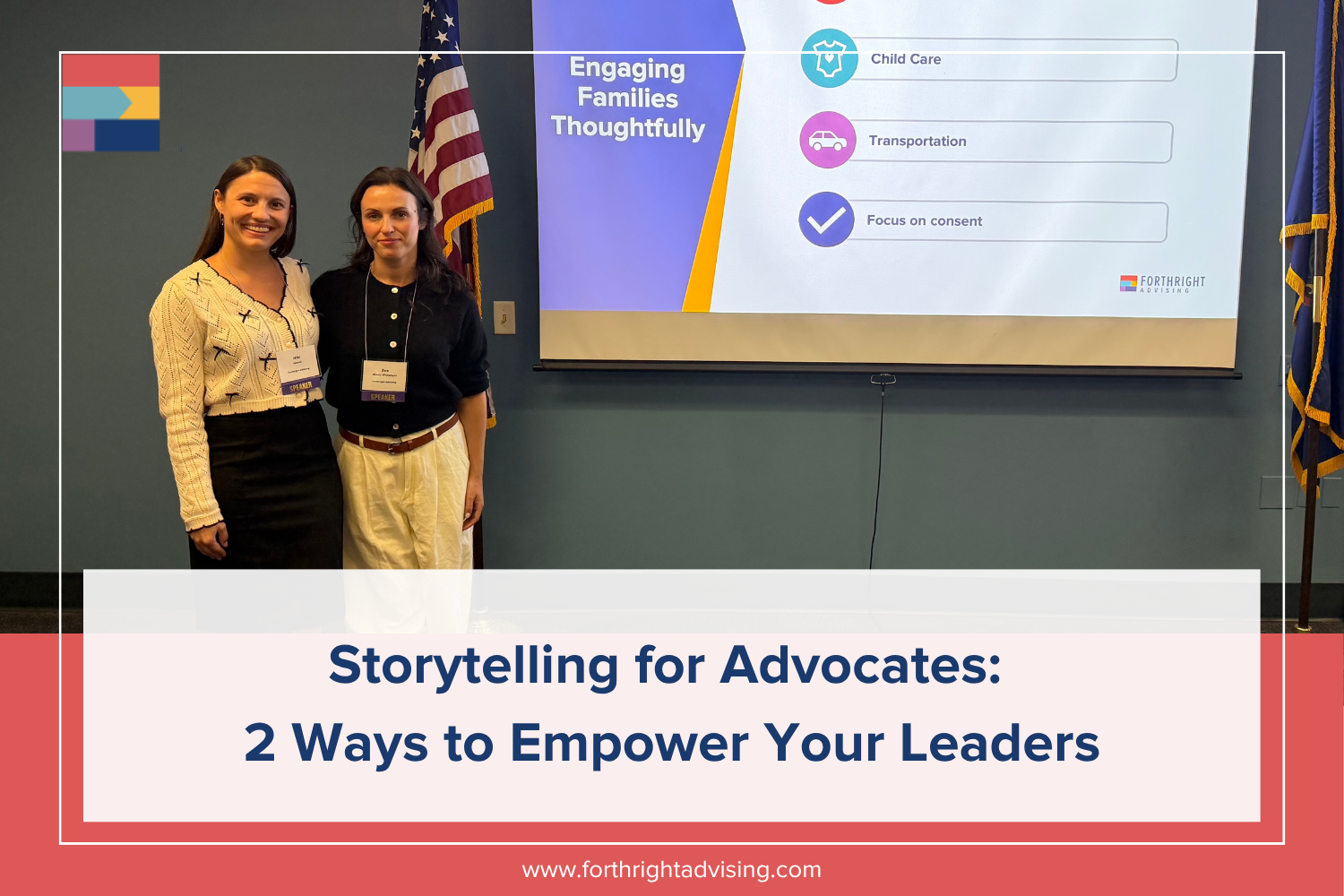
Storytelling for Advocates: 2 Ways to Empower Your Leaders
Written by niki juhasz
what’s in the Blog
This guide highlights why storytelling is essential – noting that audiences remember facts 22 times more when shared through a narrative – and provides a framework for building a quote bank to streamline content creation.
Beyond traditional formats, you’ll learn:
how to leverage authentic, low-cost video and live testimony to build trust.
a four-step preparation process to ensure advocates feel confident, covering goal alignment, audience research, time management and technical logistics.
shift your strategy from simply collecting stories to truly partnering with those who tell them to drive legislative change and community impact.
A couple of weeks ago, Zoe and I presented at the Pennsylvania Family Leadership conference. They invited us to speak about the power of storytelling. We walked through how storytelling can make a difference, best practices for setting up (or expanding!) a storytelling program and how to create smart storytelling practices.
We focused on how to ensure family leaders have what they need to succeed in storytelling. One family leader mentioned that while she has shared her story dozens of times, only one nonprofit ever truly prepared her.
That’s why I’m sharing some of our tips below!
are you choosing the right format of storytelling?
The data behind storytelling is strong. People remember facts up to 22 times more when it’s related to a story. Sometimes, we get caught up in thinking there’s only ONE way to tell a story. In reality, creating a sticky, memorable story takes many different forms.
Here are some story formats (traditional and less so) that can help you connect with your audience:

💬A single quote, along with more details of your work and your perspective.
One of my favorite things to do is create something we call a quote bank. Any time I interview someone for a story, or work together to prep for a hearing or council testimony, I jot down several quotes. I then ask the person to review, edit and approve the quotes, if they’re comfortable with being quoted in our materials. I tell them where we may share the quotes and who may see them. Once the quotes are approved, I add them to our bank. Then, any time we need a quote – for our website, a grant application, a one pager – we already have a set of approved quotes to choose from! Think of these quote banks as miniature stories that have a powerful, quick and lasting impact.
💬A paragraph or a short story. I’m including one of our examples from our presentation below.
💬Videos – and they don’t have to be “professional,” hugely expensive or time-consuming.
In the age of AI, audiences are craving authentic content. They’re tired of guessing if they’re watching a real person or a robot-generated story.
A 30-second video, filmed on your phone (perhaps using a basic ring light), can do more to build trust and engagement than that perfect $50,000 benefit video (thought these videos still have their time and place, too).
💬Live testimony at a policy session or town hall.
💬Full stories in an annual report, grant report, one pager, brochure or website.
Consider what you’re trying to accomplish with your campaign or communications, what your team has capacity for – and then think creatively about how you can best highlight those you serve!
The goal is to capture the heart of what you’re trying to convey so you invite people to truly absorb your point and remember it.
are you preparing advocates and leaders to tell their stories?
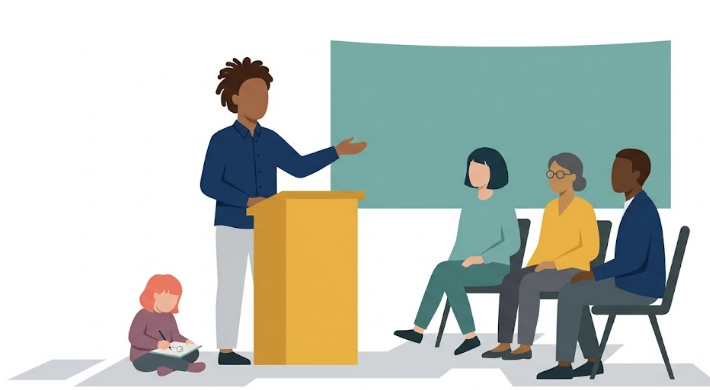
At the conference, we were lucky enough to have several passionate family leaders in our session. They’re fighting to make a difference every day – but in many cases, they aren’t communications experts! Here are some ways to make them feel even more empowered and prepared when they’re sharing their story.
We recommend sitting down with family leaders – whether by phone, video or in person, depending on what they prefer – and sharing:
Your goals. Are you trying to pass legislation? Fight misconceptions? Get donations? Share what you’re trying to do and why you’re doing it. You can use this template as a starting point:
Template Message
Thanks so much for chatting with me today. [INSERT HOW YOU WERE CONNECTED.] We’re putting together a campaign focused on [INSERT WHAT.] We want [INSERT WHO TO DO WHAT.] [INSERT WHO] shared that you have valuable insights and experiences on this topic. We’re hoping you’ll share your story [INSERT HOW.] First, I wanted to check in – is this something you’re interested in?
Example in Action
Thanks so much for chatting with me today. Mary let me know that you two worked closely together to get your son’s IEP implemented. We’re putting together a campaign focused on accessibility in our schools. For example, we know none of our elementary schools have a wheelchair accessible ramp. We want our school board to pass a budget that includes funding to build these ramps. Mary shared that you have valuable insights and experiences on this topic. We’re hoping you’ll share your story during an upcoming school board meeting. First, I wanted to check in – is this something you’re interested in?
2. Who they’re speaking with. For example, if they’re talking at a council meeting, share a quick overview of each councilmember! If you’re interviewing them for your annual report, tell them who typically reads your report and what they care about.
3. How long they have to speak. Another family leader in our session shared that she was speaking at a benefit, and no one shared a time limit with her. She prepared a 10-minute speech… only to be told that she had 2 minutes to speak once she was at the benefit. She naturally felt frazzled and ill-prepared to pivot so quickly. That’s a real lost opportunity!
4. The format and what to prepare for. For example, we know that video often makes a person’s face look shiny – so bringing powder helps. Or if you’re asking family leaders to mingle during your benefit, knowing that helps, too. Will council leaders get a chance to ask them questions? Let them know that ahead of time. The more you can share, the better.
Once we share all the necessary information, we always offer to help advocates with talking points (if they want that support!) and offer a chance to practice together, too.
It’s all about ensuring your partners feel confident and excited about the opportunity.
Now get out there, lift up those lived experiences and *get stuff done.*
About the Author
Niki Juhasz is a Vice President at Forthright Advising with more than 10 years of experience in advocacy, nonprofit and government communications. Niki has led high-impact campaigns for organizations like Children’s Law Center, including the unanimous passage of the Student Fair Access to School Act. Her expertise lies in bridging the gap between complex policy initiatives and human-centered storytelling. Since joining Forthright, she has partnered with nearly 20 clients to build storytelling capacity, helping family leaders and advocates transform lived experiences into powerful tools for legislative change and community impact.