Optimize Your 2026 Digital Resources for AI Search Answers
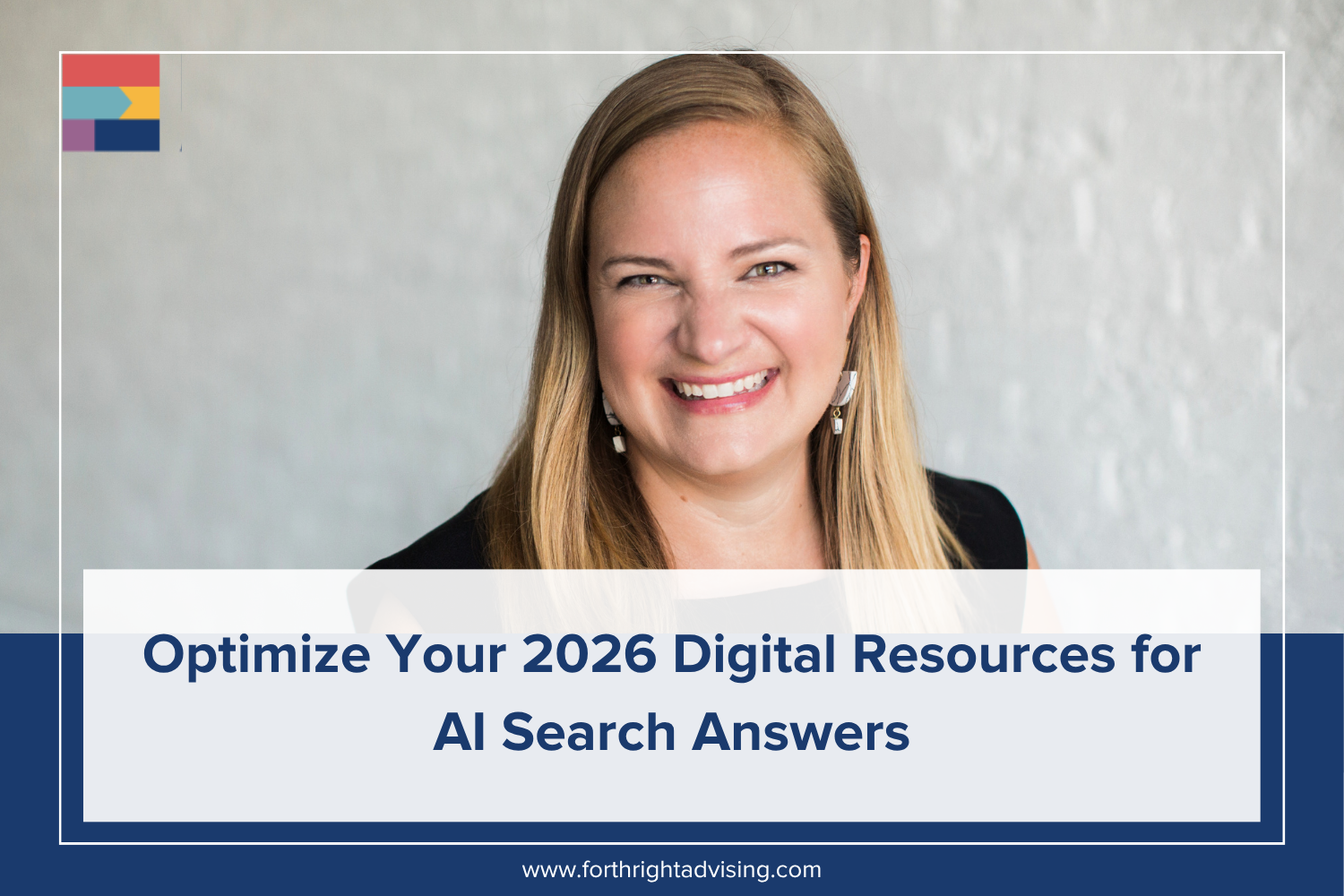
Written by katie test davis
I spent nearly an hour last week searching for an infographic we created for a client.
My bad filing skills aside, that time I spent searching made me think of how many resources just… get lost in the shuffle.
With AI starting to crawl all over our clients’ websites, we’re starting to see just how much good design and smart layouts MATTER in making sure your hard work gets seen.
We want to make sure the right resources wind up in families' hands. That starts with understanding the emerging trends.
Today, it isn’t good enough to just throw your information up on the web and make sure it has the keywords you know your audience searches for.
Instead, you need to intentionally lay out information so that it appears in AI search summaries (like Google's AI overviews) and comes up in the right AI search answers. Recent research from UPCEA shows generative AI tools like ChatGPT, Gemini and Google's AI Overviews shape how people gather information, verify details and form opinions.
You pour massive energy into creating beautiful, data-rich resources for your campaigns. It’s heartbreaking when those tools do not reach the families and policymakers who need them most.
So… let’s fix that, shall we?
structure your data clearly
When AI scans the web for search answers, it looks for the simplest data. This means that you should structure your data so that it is easy for the robots to grab.

For example, when you post a new infographic about child tax credits, ensure you pair it with a text summary section that features a simple, clear bulleted list of the main takeaways. If you can, start your bullets with numbers, such as:
17 states now offer state-level credits
Over 36 million families received payments for over 61 million children in 2021
use descriptive language
Use clear headings and file titles to help AI tools understand and cite your content accurately. When you’re laying out information on your website, make sure you’re using Header 1 (H1) and Header 2 (H2) to indicate hierarchy and organize your information. Avoid just dumping all your text on the page and calling it a day.
Same goes for file names when you upload PDFs or images. Instead of naming a file "graphic_final.jpg," use a title like "2026-child-care-funding-chart.jpg" to tell the AI exactly what the image contains.
keep your info fresh
AI favors fresh content. This means that you should update your content regularly, and ensure that even if content is evergreen you still mark it appropriately with the current year.
For example, if your advocacy roadmap is for three years, and you’re on year two, update it on your website so your H1 header says 2026 Advocacy Roadmap. Then, set a reminder to change it in 2027.
Families looking for support might see an AI summary before they ever spot your traditional website link. We want your hard work to be exactly what AI tools cite and point users to.
Your mission is to get families the information they need, and that starts with thoughtfully designing your digital assets!
Now, get out there and make your web pages shine.
PS - Navigating these digital shifts takes time you… might not have. We’ve got you; we’re doing this sort of updating for multiple clients right now. Explore our Digital and Social Media Marketing services to ensure your advocacy materials build the momentum you deserve.
About the Author
Katie Test Davis is an award-winning public relations strategist and the Founder of Forthright Advising, a national communications firm dedicated to organizations that support children and families. With nearly 20 years of communications experience spanning public school districts, family-focused nonprofits, and government agencies, Katie specializes in combining data-driven PR strategies with authentic community engagement. Recognized in the Forbes Next 1000 and featured in publications like Education Week, her extensive in-house background and proven track record of driving systemic change uniquely qualify her to share expert, field-tested insights on child-focused communications and advocacy.