
The Most Trusted Person in America Works in YOUR School District

WRITTEN BY KATIE TEST DAVIS
Remember that old spelling tip? There’s a PAL in principal?
Well, that saying has more than one meaning these days, as new data reveals that school principals are critical spokespeople for school districts.
Check this out:
September 2019 data from Pew reveals that 84 percent of people believe principals to be caring and provide fair and accurate information to the public — the most of all professions.
The Data Quality Campaign reports parents trust those closest to their children (such as teachers, principals and guidance counselors) to appropriately support them, with 88 percent trusting principal support.

That’s not only stunning. That’s communications gold.
Savvy school district leaders will take this data as their cue to double down on principal empowerment. Here’s a quick checklist of questions to ask yourself:
Do our principals have the most up-to-date information on our district’s newest offerings?
Do our principals know the answers to our most frequently asked questions?
Is there a new program that the district has started recently that our principals should know about?
Do our principals know about any recent awards the district has won, or any new accolades?
Can our principals effectively connect prospective parents with the right person from the district office to help them get more information?
If the answer to any of those questions is no — you’ve got a great opportunity ahead.
Are you already using principals as spokespeople? We’d love to hear all about it. Let us know how it’s going — the good and the challenging!
POPULAR POSTS LIKE THIS

My first job after college was at a PR agency.
I was working with – and I’m not sure how else to phrase this – men’s men. Think: veterans starting their own government contracting businesses, construction CEOs, cybersecurity leaders and more. There was plenty of little lady-ing.
But there were also many, many lessons that I’m still using in my career today, 15 years later. I’m including one of my favorites, and some additional best practices, below.

You know those days where you just want someone to tell you where we're going to dinner?
Sometimes, I get really tired of making decisions – partly because as busy leaders, we make decisions at work all day, every day.
We ask questions such as:
Should we complete this grant application?
Which events should we go to?
Is that conference worth it?
And sometimes, your teammates don’t agree on the answer.
That’s why at Forthright, we use – you guessed it – a data-backed approach to make these decisions.
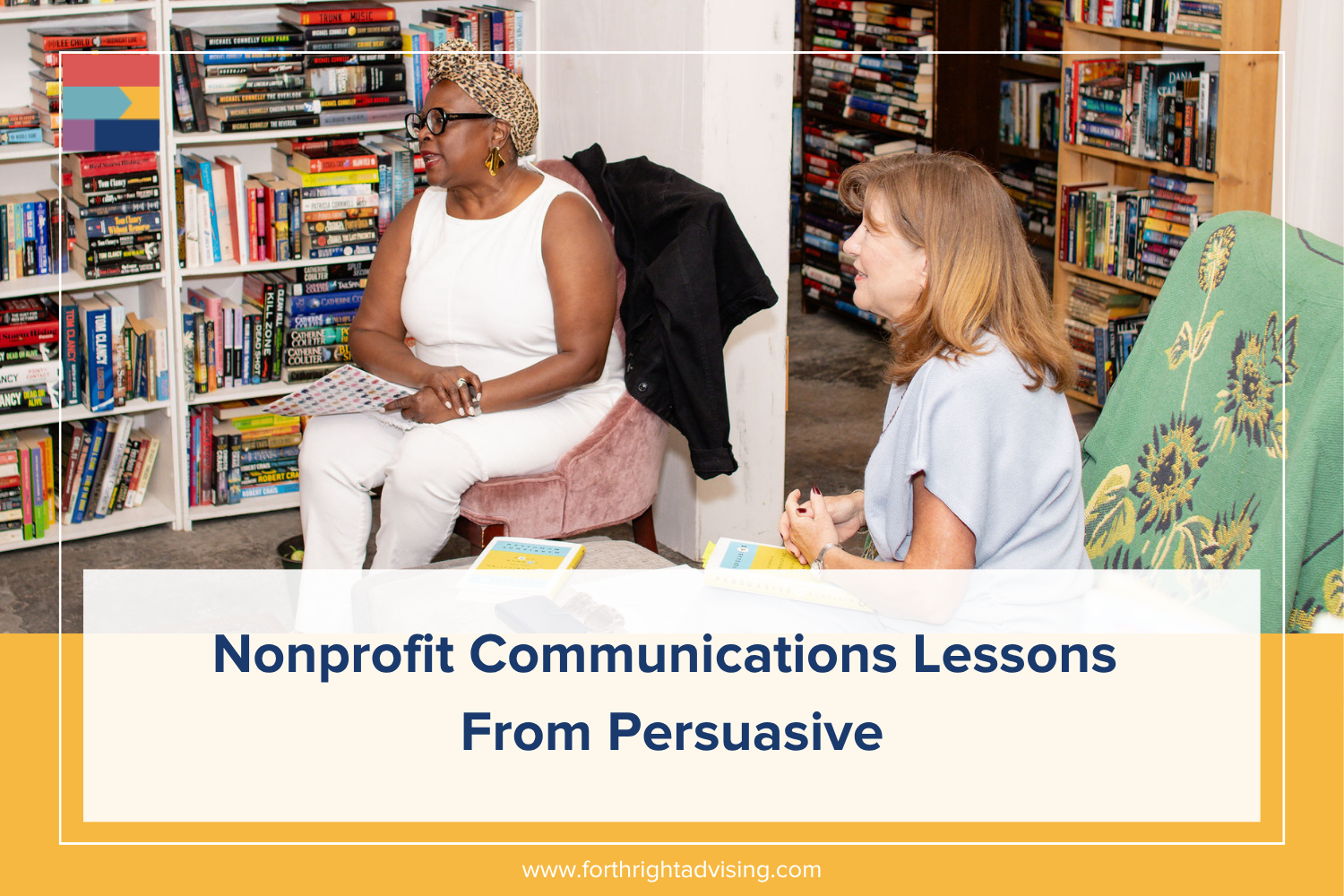
In our world of child and family advocacy, few communicators have navigated the trenches quite like Marrianne McMullen.
From managing high-stakes crises in the Obama administration to shaping narratives at DC Public Schools – where I had the immense privilege of working for her – Marrianne has spent her career masterfully championing policies that support children and families. Today, she serves as the Director of Communication & Dissemination at Chapin Hall, an independent research and policy center focused on child and family well-being.
To celebrate the two-year anniversary of her book, Persuasive, I sat down with my former boss and mentor to reflect on what it takes to effectively move the needle.
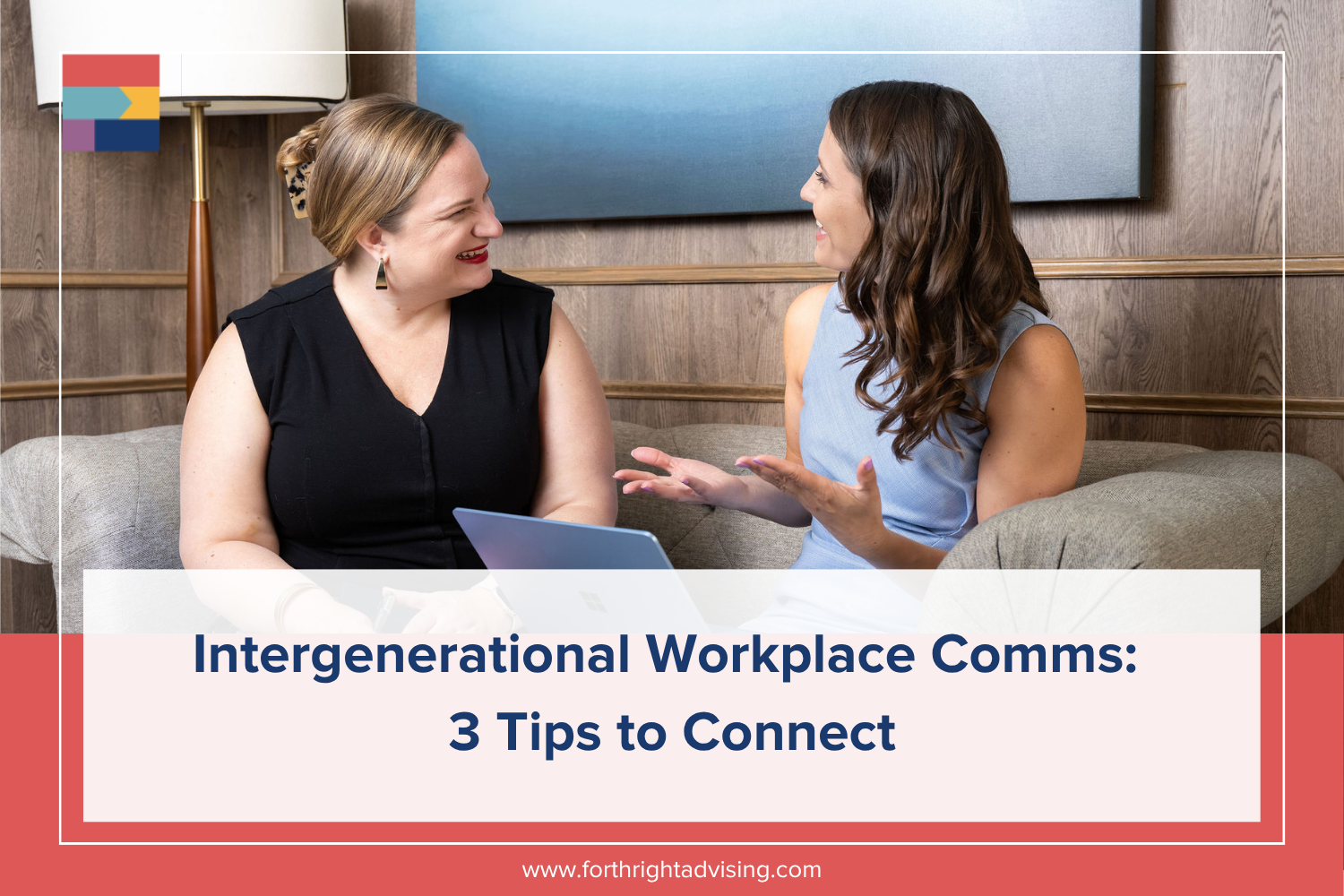
Age gaps exist all across the organization.
From your eager intern to your seasoned board members (and your program staff to your executive director), you're likely communicating across up to 40 years of generational differences.
Here are some tips and tricks to help you stay aligned.
When we launched our research process – the one that led to our new Frenemies + Jargon: Breaking the Habits That Stall Child and Family Advocacy report – I had suspicions about what we’d find.
We heard that as a field, we’re often fake friends.
Let’s break down what we heard and what we can do about it.
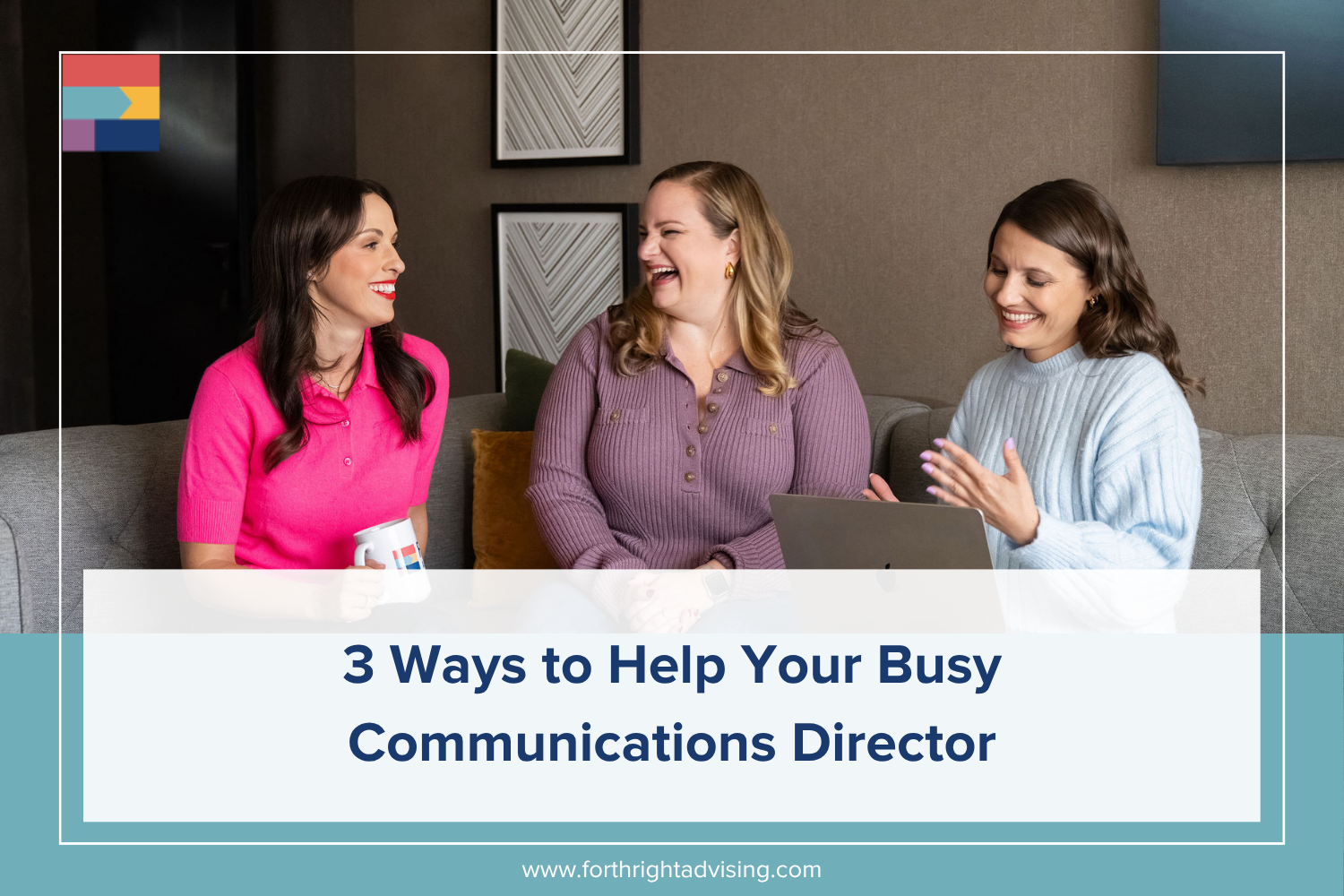
Our average coaching client is a communications director. For the sake of this blog, let’s call her Chloe.
Chloe typically works at a public school district, a foundation or a nonprofit.
She landed in her director role coming from the policy, program or development team. She may only have a few years of direct communications experience, but she’s a natural.
Most of the time, she’s a team of one, and she’s carrying everything communications for her organization.
That’s where we step in as a coach.
Here’s a behind-the-scenes peek at what we normally help out with.
So, you need to tell your board of directors or your school board some bad news.
First, blerg. Sorry about that!
Second, we’re here to help.
I've had the opportunity to be involved in some excellent examples of how to do this well – and, unfortunately, I’ve also had to help clean up a few, um… shall we say, less-than-stellar attempts.
Here is a key approach that I’ve seen work well over the years.
My cats have me trained.
Yeah, you read that right.
THEY trained ME.
Are we suckers? Oh, absolutely. No question.
Yet, there are some very solid communications lessons to be learned from being a human… trained by… a cat. Here’s what we can all learn.

We’re so used to chasing perfect. Perfection in our work, presenting the perfect image online.
But the thing is, people are tired of perfect. And that needs to impact the way we do our work and the way we advocate. Here’s what’s going on – and what to do about it.
I’m the first to admit it: I’m a nerd for data.
If something is going wrong – I want to know why, so I can fix it.
If something is going well – I want to know why, so I can keep doing it.
That’s why I love a good communications audit. Here’s why you should join me in my nerd-dom and hop on the communications audit train.
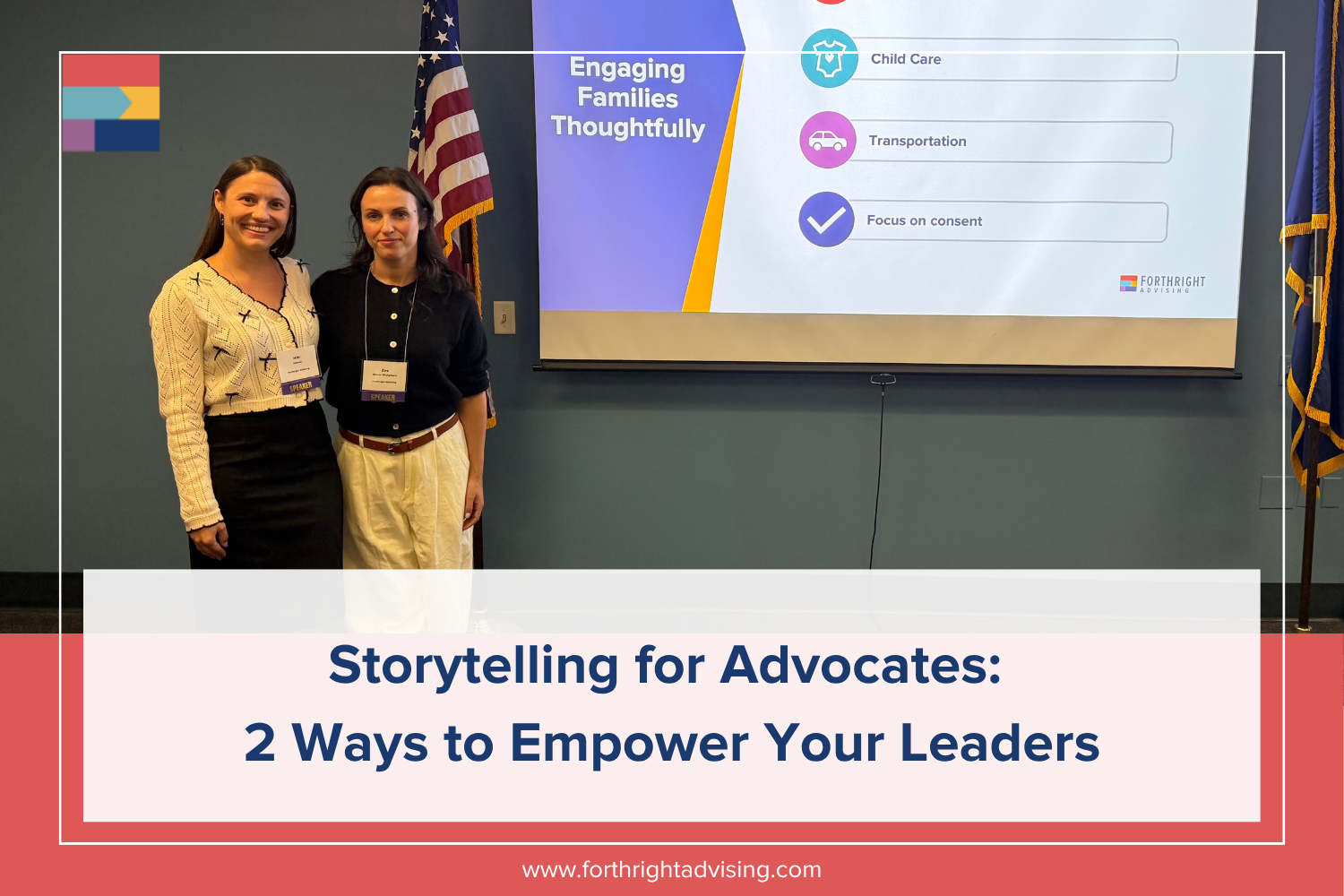
A couple of weeks ago, Zoe and I presented at the Pennsylvania Family Leadership conference. They invited us to speak about the power of storytelling. We walked through how storytelling can make a difference, best practices for setting up (or expanding!) a storytelling program and how to create smart storytelling practices.
We focused on how to ensure family leaders have what they need to succeed in storytelling. One family leader mentioned that while she has shared her story dozens of times, only one nonprofit ever truly prepared her.
That’s why I’m sharing some of our tips below!
Your team is working really hard. You know what? I’ll say it. Too hard. They’re surrounded by uncertainty, harm and crises. You’re facing staffing changes. (And we’re seeing an unprecedented spike in leadership turnover, too.) The landscape you’re working in is constantly evolving. It’s so easy for your team morale to take a hit when just one of these things occur.
But when all of them are happening all at once? It’s time to focus on improving your team morale.
You want your team to feel energized and hopeful, knowing their vital role contributes to the bigger picture.
How? Well, here are a few morale-boosters workshops we have hosted for various teams (including our own):