
Can we just...not?

Written by Katie Test Davis
Alright people. It is a new year, and this is a rallying cry. I need your help.
I’m *determined* that 2022 is the year where we get to use everything we have learned, and continue to learn, during the pandemic and STOP trying to do it all.
We, as the smart, amazing people who work on behalf of families and children, are no longer going to spend our precious time on projects that don’t have a proven return on that time investment.
Instead, we’re going to ruthlessly prioritize, and that begins by deciding what we’re going to say no to.
To make saying no as easy as possible, the Forthright team created a new quiz tool to help nonprofit professionals like you figure out what to take off their list.
Now, I’m asking you to help us stop the madness. More than three hundred people have already checked out our Anti-Resolution Quiz to reveal the communications task they can take off their to-do list in 2022.
If you want your colleague—you know the one—who routinely answers emails at 9 p.m. to reclaim her time, send her the quiz so she can figure out what she can take OFF her list.
If your work bestie is toiling away trying to stay on top of blog posts that get 15 or fewer views each, help him confidently decide to shut. it. down.
Please share our quiz far and wide with your friends and colleagues.
Let’s all slam the door on a tired tactic that isn’t worth the time or effort—ensuring we can focus on taking care of ourselves so we can reach our organizational goals.

Here are four easy ways to share:
Like our post on LinkedIn to ensure your colleagues see it
Forward this email
Share the link with your professional groups and listservs
Click. Did you hear that? That’s the sound of people across the country closing their laptops before 10 p.m. Or the satisfying sound of shutting the office door on their way to meet friends for a walk or drink. Now doesn’t that feel good?
POPULAR POSTS LIKE THIS

No matter where you turn, the election is buzzy.
The final two weeks before the election are some of the most important – and therefore, some of the most challenging.
Here are a few reminders as you barrel towards November.
I have a short, cautionary tale brought to you by my early-career mistakes. Here’s what’s in it for you:
My blunder is your happy guide to modeling a culture where asking great questions empowers everyone and makes your work better.
Early in my career in the U.S. Senate, I got a call from another Senate office asking my boss to sign onto important legislation.
There was just one teeny tiny problem… I didn’t know what to do next.
I am really good at communication. I am TERRIBAD at math.
Accounting, even for my own business, takes A LOT of focus and explanations for me to understand. My eyes glaze over at spreadsheets.
I’m telling you this so you believe me when I say that if I’m writing you an entire email about a tax form, it is directly relevant to your communications.
I don’t just dilly dally in tax forms for funsies. No ma’am, no way. But times they are a-changin, and as communicators, we need to tap into the 990 game.
But let’s start at the beginning, shall we?
Have you noticed that people… aren’t reading stuff very closely right now? (Not you, you’re doing a great job reading this blog so far!)
Do you notice colleagues are more checked out than usual?
Burnout, compassion fatigue, cognitive overload – you name it, our audiences have it. We’ve got short attention spans, and even shorter fuses.
So what’s a communicator to do to get attention? Throw a party, of course.

While ghostwriting is absolutely one of my favorite projects, it's taken me years to get it right. (Or should I say write?). Today, I'm sharing some of my favorite best practices.
I’ve ghostwritten for more superintendents, CEOs and leaders than I can count. Here are the steps I never skip.
And for you CEOs and leaders who are getting ghostwritten for – these same tips apply!
My first job after college was at a PR agency.
I was working with – and I’m not sure how else to phrase this – men’s men. Think: veterans starting their own government contracting businesses, construction CEOs, cybersecurity leaders and more. There was plenty of little lady-ing.
But there were also many, many lessons that I’m still using in my career today, 15 years later. I’m including one of my favorites, and some additional best practices, below.

You know those days where you just want someone to tell you where we're going to dinner?
Sometimes, I get really tired of making decisions – partly because as busy leaders, we make decisions at work all day, every day.
We ask questions such as:
Should we complete this grant application?
Which events should we go to?
Is that conference worth it?
And sometimes, your teammates don’t agree on the answer.
That’s why at Forthright, we use – you guessed it – a data-backed approach to make these decisions.
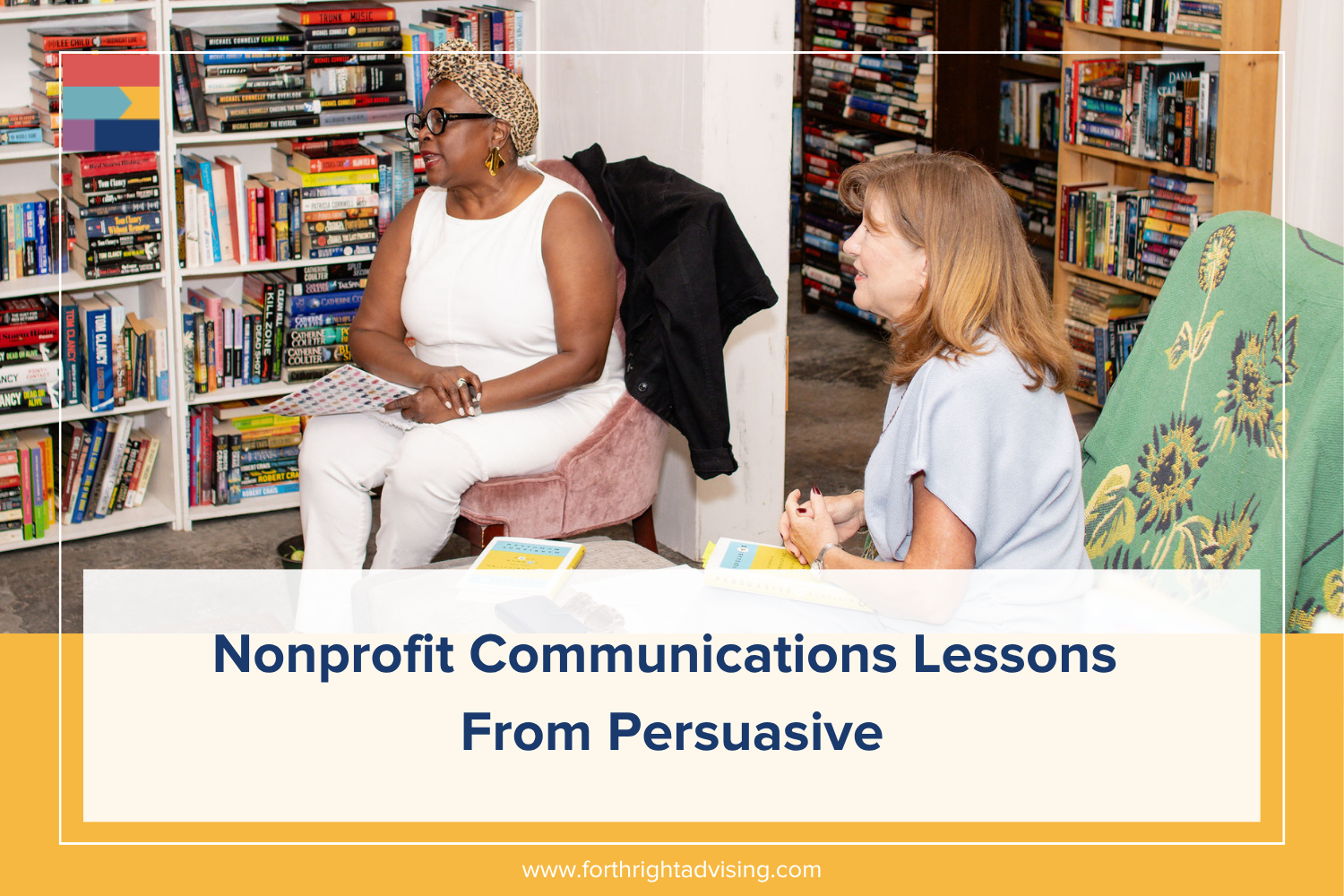
In our world of child and family advocacy, few communicators have navigated the trenches quite like Marrianne McMullen.
From managing high-stakes crises in the Obama administration to shaping narratives at DC Public Schools – where I had the immense privilege of working for her – Marrianne has spent her career masterfully championing policies that support children and families. Today, she serves as the Director of Communication & Dissemination at Chapin Hall, an independent research and policy center focused on child and family well-being.
To celebrate the two-year anniversary of her book, Persuasive, I sat down with my former boss and mentor to reflect on what it takes to effectively move the needle.
When I say the word hope, I can hear some of you out there sighing through the internet tubes. And honestly, fair enough. In our field right now, hope can sometimes get packaged up like a vague platitude or a promise that misses the point.
But, hear me out. Today, I’m talking about the kind of hope that’s fierce and very, very practical.
Data consistently tells us that messaging has to trigger a sense of hope if you want to make sure your audiences don’t default to defensiveness.
Age gaps exist all across the organization.
From your eager intern to your seasoned board members (and your program staff to your executive director), you're likely communicating across up to 40 years of generational differences.
Here are some tips and tricks to help you stay aligned.
When we launched our research process – the one that led to our new Frenemies + Jargon: Breaking the Habits That Stall Child and Family Advocacy report – I had suspicions about what we’d find.
We heard that as a field, we’re often fake friends.
Let’s break down what we heard and what we can do about it.
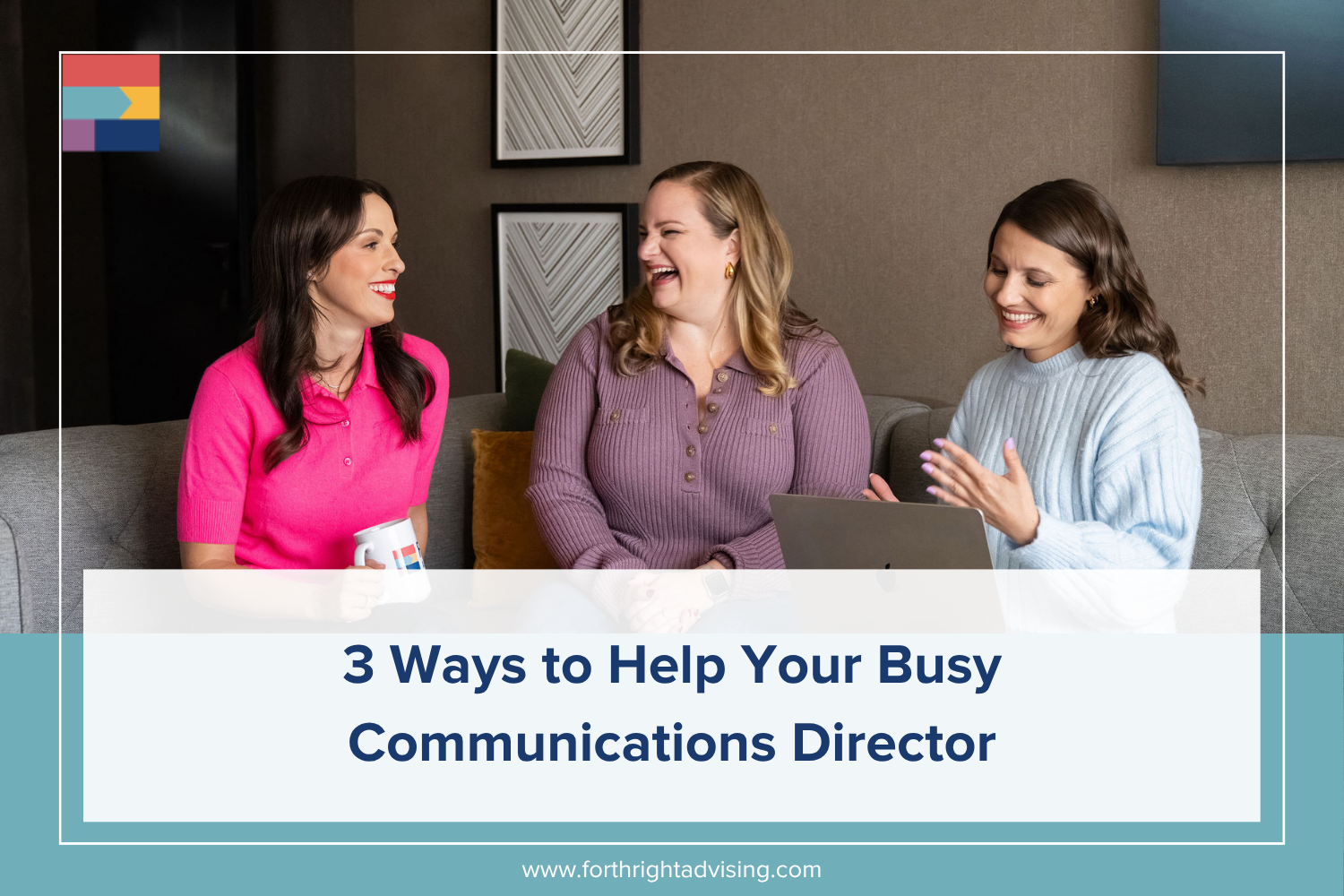
Our average coaching client is a communications director. For the sake of this blog, let’s call her Chloe.
Chloe typically works at a public school district, a foundation or a nonprofit.
She landed in her director role coming from the policy, program or development team. She may only have a few years of direct communications experience, but she’s a natural.
Most of the time, she’s a team of one, and she’s carrying everything communications for her organization.
That’s where we step in as a coach.
Here’s a behind-the-scenes peek at what we normally help out with.
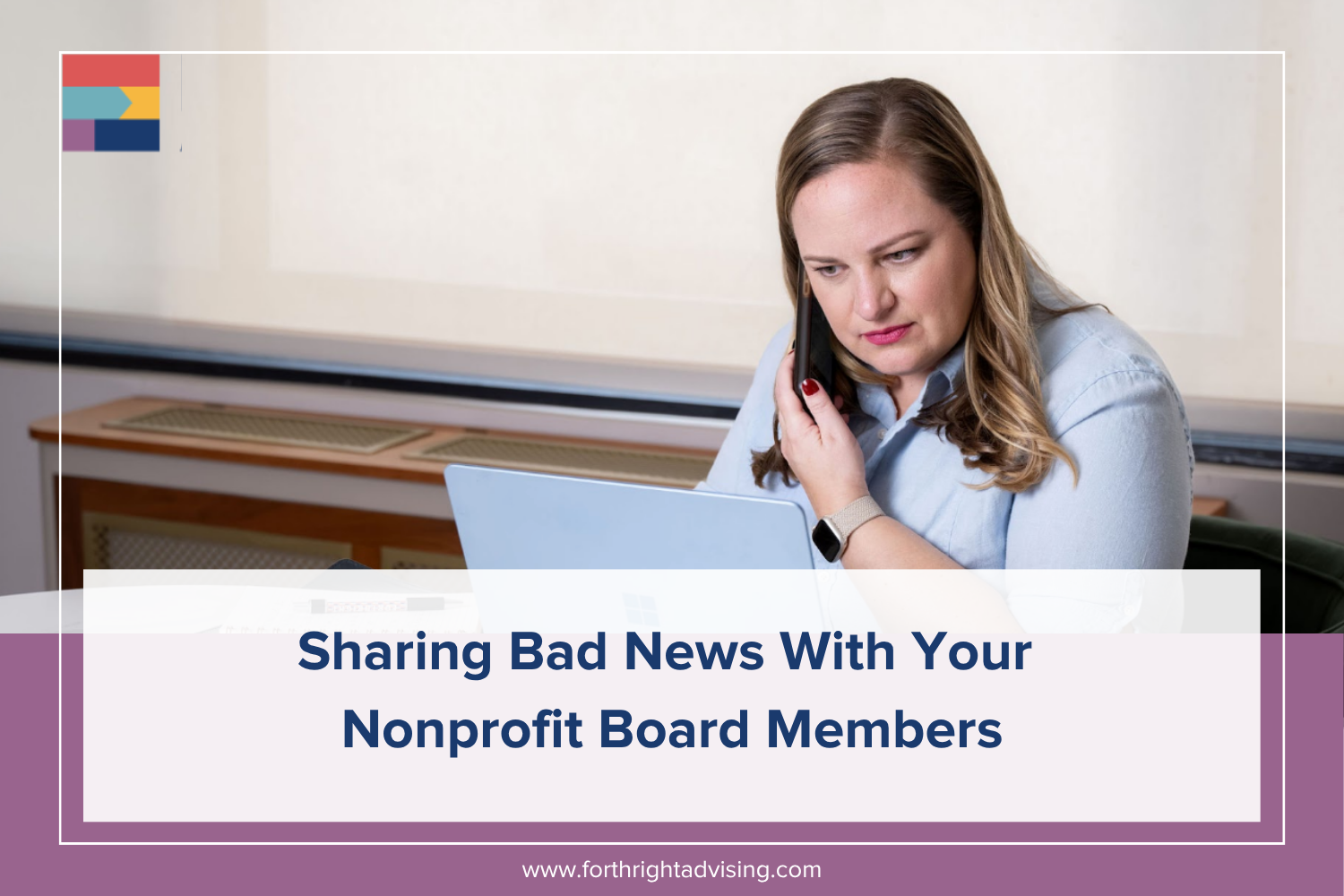
So, you need to tell your board of directors or your school board some bad news.
First, blerg. Sorry about that!
Second, we’re here to help.
I've had the opportunity to be involved in some excellent examples of how to do this well – and, unfortunately, I’ve also had to help clean up a few, um… shall we say, less-than-stellar attempts.
Here is a key approach that I’ve seen work well over the years.

We know that right now, the families you serve, the partners you need, the funders you want to attract and the policymakers who need to know your work have completely changed how they use the internet.
The way they use conversational search on platforms like ChatGPT, Google's AI Overviews, and Gemini means we simply need to make sure your organization is the trusted AI citation your audiences find.
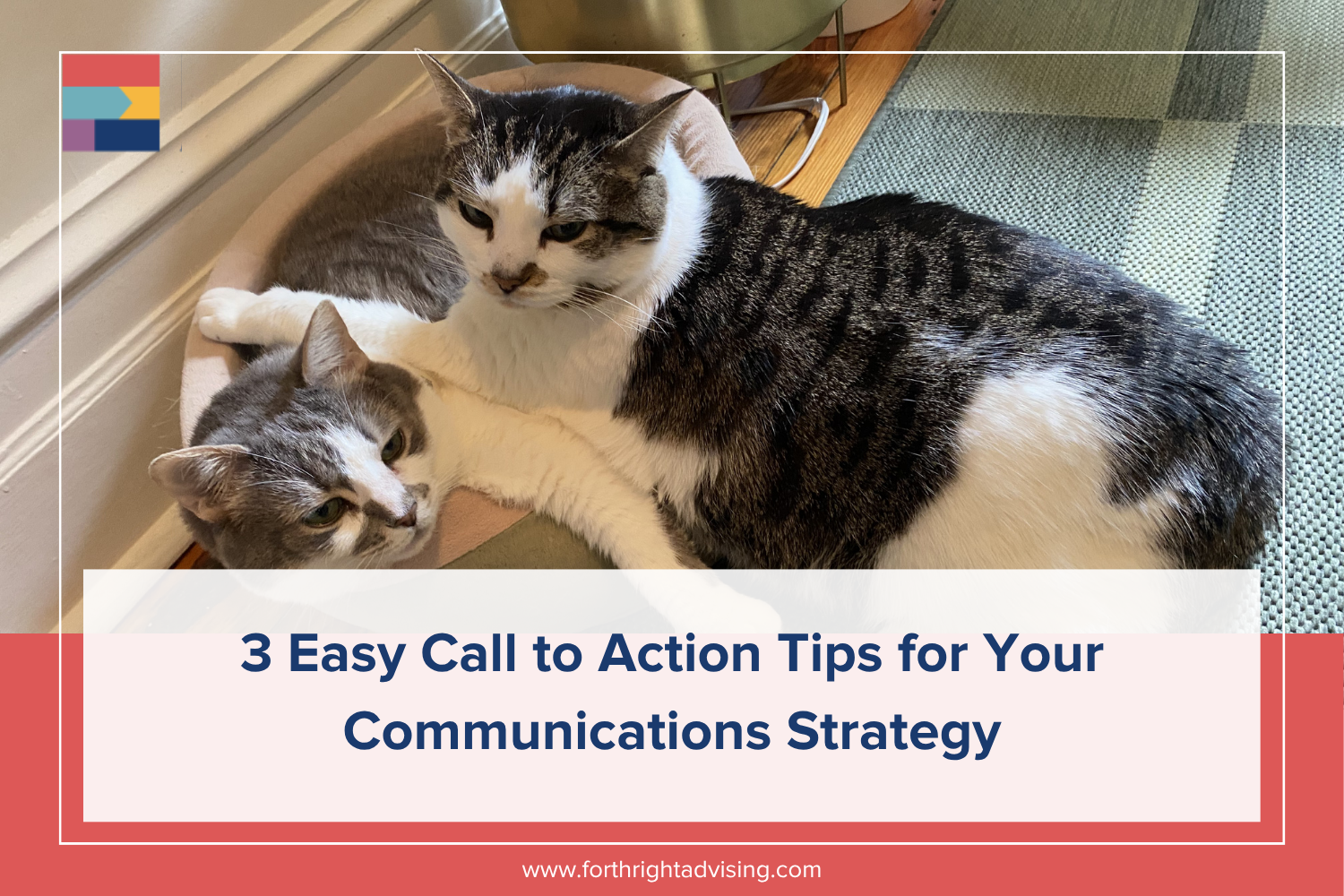
My cats have me trained.
Yeah, you read that right.
THEY trained ME.
Are we suckers? Oh, absolutely. No question.
Yet, there are some very solid communications lessons to be learned from being a human… trained by… a cat. Here’s what we can all learn.