
Presenting on preschool suspensions at NBCDI

Written by Niki Juhasz
We’re headed to Charlotte this weekend for the National Black Child Development Institute’s national conference!
Forthright’s own Michael Ramsey is joining our partners with the North Carolina Coalition for Inclusion, Not Expulsions at the conference.
Michael is presenting alongside Coalition members Dr. Valerie Jarvis McMillan of North Carolina State A&T University, and Dr. Nina Smith of North Carolina Central University. They’re sharing about a topic that affects all of our communities: eliminating racial inequities in suspensions and expulsions in early care and education settings.
You can catch their session on October 14 at 3:30 p.m. EST.
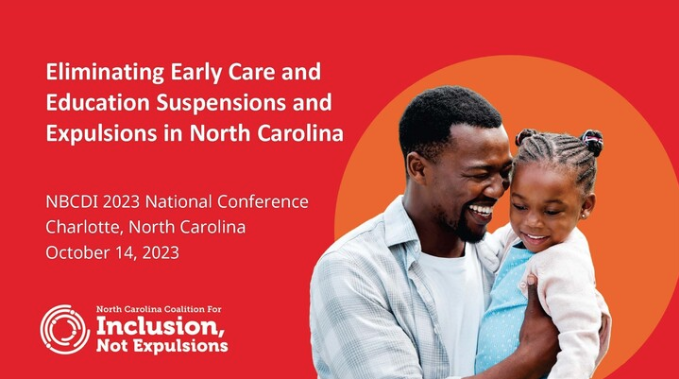
Year after year, data shows Black preschoolers, especially Black boys, are significantly more likely to be suspended or expelled than white preschoolers. That means Black children are far too likely to miss early childhood experiences that support healthy brain development and help unlock their fullest potential.

The Coalition includes researchers, care providers, advocates, and of course, families. Together, this group of dedicated partners is working to create a North Carolina where our youngest Black children – ages two to five – and their families have fair and equitable opportunities to fully participate in all early care and education settings.
We’ve been hard at work behind the scenes partnering with the Coalition as they seek to build a better world for North Carolina children and families, and we’re *thrilled* to share their vision with the world.
During the Saturday session, Michael will talk more about the role of branding and communications in this important work!
We’re excited to share about our experiences in this space – and to continue learning from other experts, too.
POPULAR POSTS LIKE THIS

You know those days where you just want someone to tell you where we're going to dinner?
Sometimes, I get really tired of making decisions – partly because as busy leaders, we make decisions at work all day, every day.
We ask questions such as:
Should we complete this grant application?
Which events should we go to?
Is that conference worth it?
And sometimes, your teammates don’t agree on the answer.
That’s why at Forthright, we use – you guessed it – a data-backed approach to make these decisions.
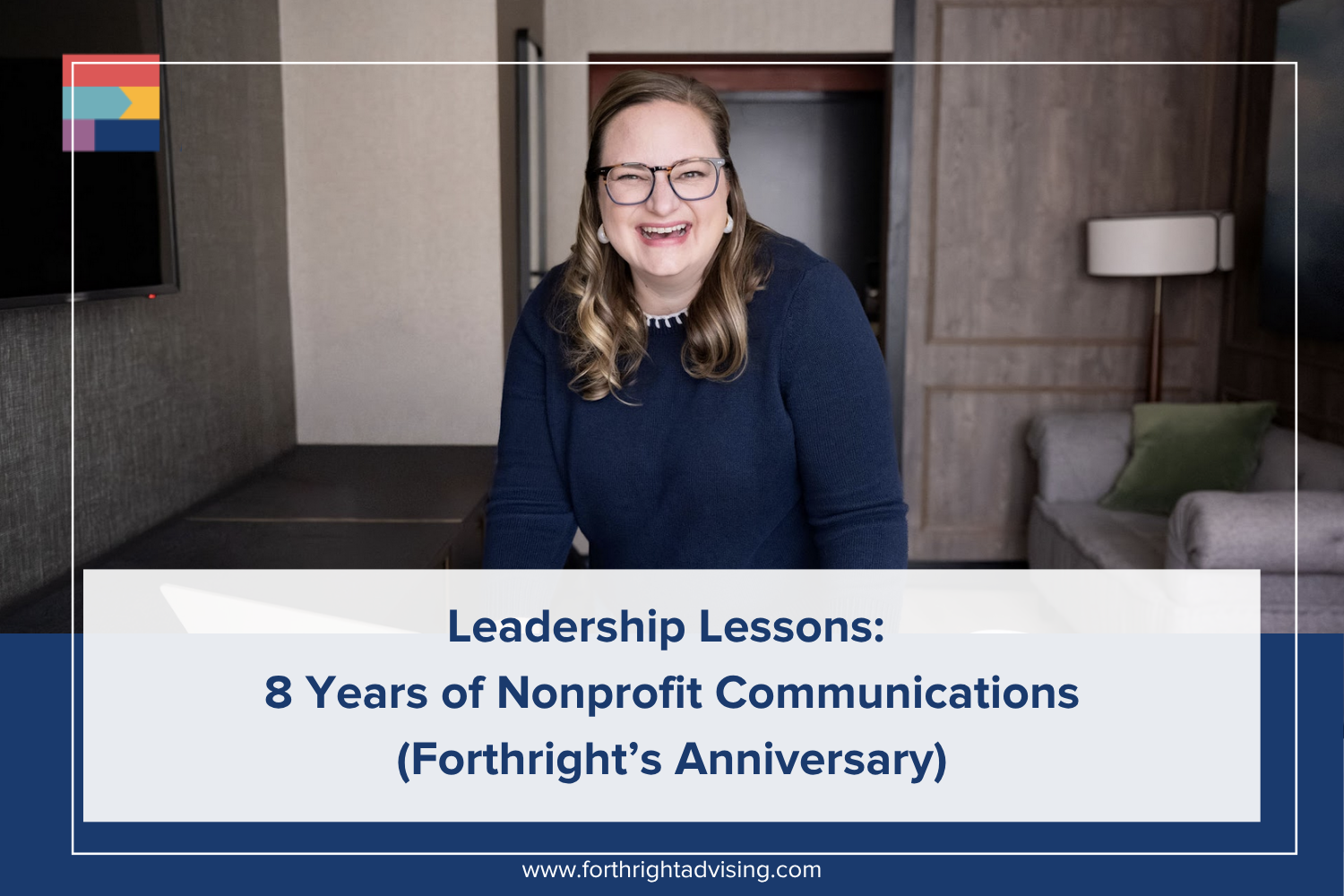
It’s 2026 and I’m wearing a party hat – because today, Forthright officially turns eight years old.
When we learned that the traditional present for an eighth anniversary is pottery, it felt perfect – and it got me thinking about all the connections between my work as a leader and my work as a potter.
I’m sharing more (and celebrating our team and anniversary) here.
News breaks.
Funding is cancelled.
New legislation is enacted.
How do communicators like you find steady ground while everything feels like an earthquake?
We get it. It’s a lot.
Yet charting a stable course on unsteady ground is something we’re pretty darn good at here at Forthright. (In fact, we have data to prove it. We heard from our clients in our 2025 client happiness survey that we’re a shelter in the storm.)
So how do we do it? Let’s break it down.
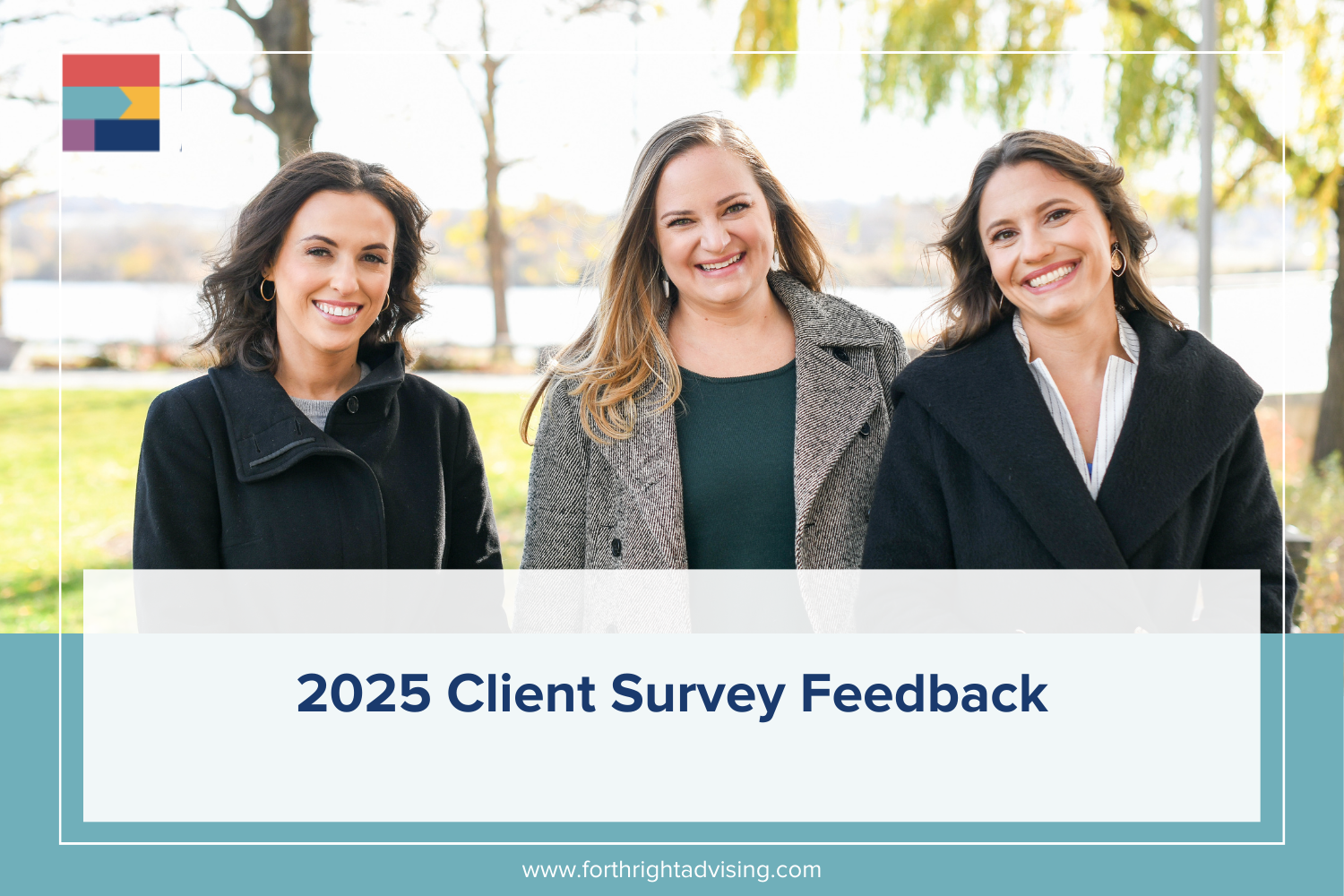
We send a client survey every year, but this time, after a tough 2025 for all of us, the results hit differently.
What we found was that, in a year marked by twists, turns and uncertainty, you valued our steadiness and trusted our strategies. Our results showed we were the steady hand our partners could rely on.
I’m also incredibly proud to share that our Net Promoter Score jumped 11 points this year. We remain way (way) above the industry standard. But, as always, I want to show our work and dive deep. So here’s a closer look at what we learned from you in our survey this year.

Your team is (understandably) dragging.
You can feel them losing sight of your “why” amidst the chaos and changing priorities.
Team meetings are downbeat and everything feels… hard.
You’re not alone. We’re hearing it from organizations just like yours across the country.
That’s why we designed a special menu of 2026 trainings that naturally foster team connection and positivity.
The ultimate success metric is that your team walks away feeling energized, hopeful, and clear on their priorities and vital role in the organization’s future.
Here are a few options for a morale-boosting team training. (Psst – don’t worry, if these don’t feel quite right for your particular team, we can design a custom training just for you.)

By popular demand, we're re-opening our training opportunities for 2026!
Our trainings have been called “an excellent investment." Also: “polished and downright perfect."
Here’s a (sampling of) what we’re offering starting in January.

Y'all, I can't believe we're already staring down the end of 2025. It's been a ride (as always).
Our team has been heads-down planning for 2026, and I am SO excited about what's coming next. We're growing, we're learning and we're getting even more focused on how we can best support the entire child-and-family space.
As part of our community, I wanted to give you an insider heads-up on a few big things we're launching.

The Forthright team just got back from sunny Orlando, Florida, for the annual Krimes Against Kids conference.
It’s a powerful event that brings together everyone from law enforcement and child protective services to survivor advocates.
Honestly, being in a room with so many people dedicated to protecting children was just incredible. As a firm that only works with organizations that help kids and families, we left feeling totally inspired.
Niki and I even had the chance to present on a topic we're incredibly passionate about: Reaching Families Without Internet Access.
In a world that’s so online, it’s crucial to remember that not everyone has the same level of connectivity.

Forthright began when I wondered:
Could I dismantle the current (broken) model of client services, and run an agency that puts people first?
Could that agency specialize exclusively in the child-and-family focused work I personally love to do?
Could we work with clients who want a true thought partner as opposed to just a vendor?
Well.
Turns out six years later, the proof, as they say, is in the pudding.

Data shows that a little happy goes a long way, from building stronger teams to reducing negative feelings overall. Today, we’re sharing how we share the happy at Forthright, along with research-backed tips for how you can share the happy within your own organization!

People are ready to fight back. They are ready to help. They are ready to "make good trouble."
Your audiences are looking for someone to tell them what to do.
If you’re a nonprofit or association leader, the person they are looking to is YOU. 🫵We’re sharing tips for how to do empower them today.

A few weeks ago, I wrote about how coalitions can improve advocacy efforts by aligning around core messages and creating easy-to-use resources to better reach your audiences.
Today, I want to talk about the next step in successfully communicating about your coalition: creating a coalition brand.

You’ve heard the news. We all have.
“There are major cuts coming to nonprofit funding.”
“Funding is being stripped from federal grants.”
“School districts face funding cuts.”
That leads you to the following question: What should you do when you need to talk about funding cuts…even while the news is still unfolding?
As a leader, your role as a communicator is really critical right now.
The heaviness is real. Freezing or waffling could create panic or more confusion.
That’s why today, we are offering three tips to help you communicate clearly about funding cuts.

This year, we updated our client survey to make sure we’re getting even more feedback.
That meant seeking out tough love – the good, the bad, the ugly – from our partners.
As always, we wanted to dig in on the places where there’s room for improvement and to celebrate the areas where we’ve made progress or continue to serve our clients exceptionally well.
Here’s what that looked like:
More constructive feedback to use for firm-wide and individual improvement
Refreshed questionnaire
1:1 interviews as follow-ups
All of that was super successful, and here’s a roundup of what we heard:

You’ve used a bad website before.
It takes forever to load. You can’t find what you’re looking for. The text blurs as you try to read it.
You can avoid these mistakes by going back to the basics of web design. Whether you’re revamping your decade-old website or starting from scratch, ask yourself these five questions: